
Mainframe Master
Learn COBOL and Mainframe Skills, Step by Step

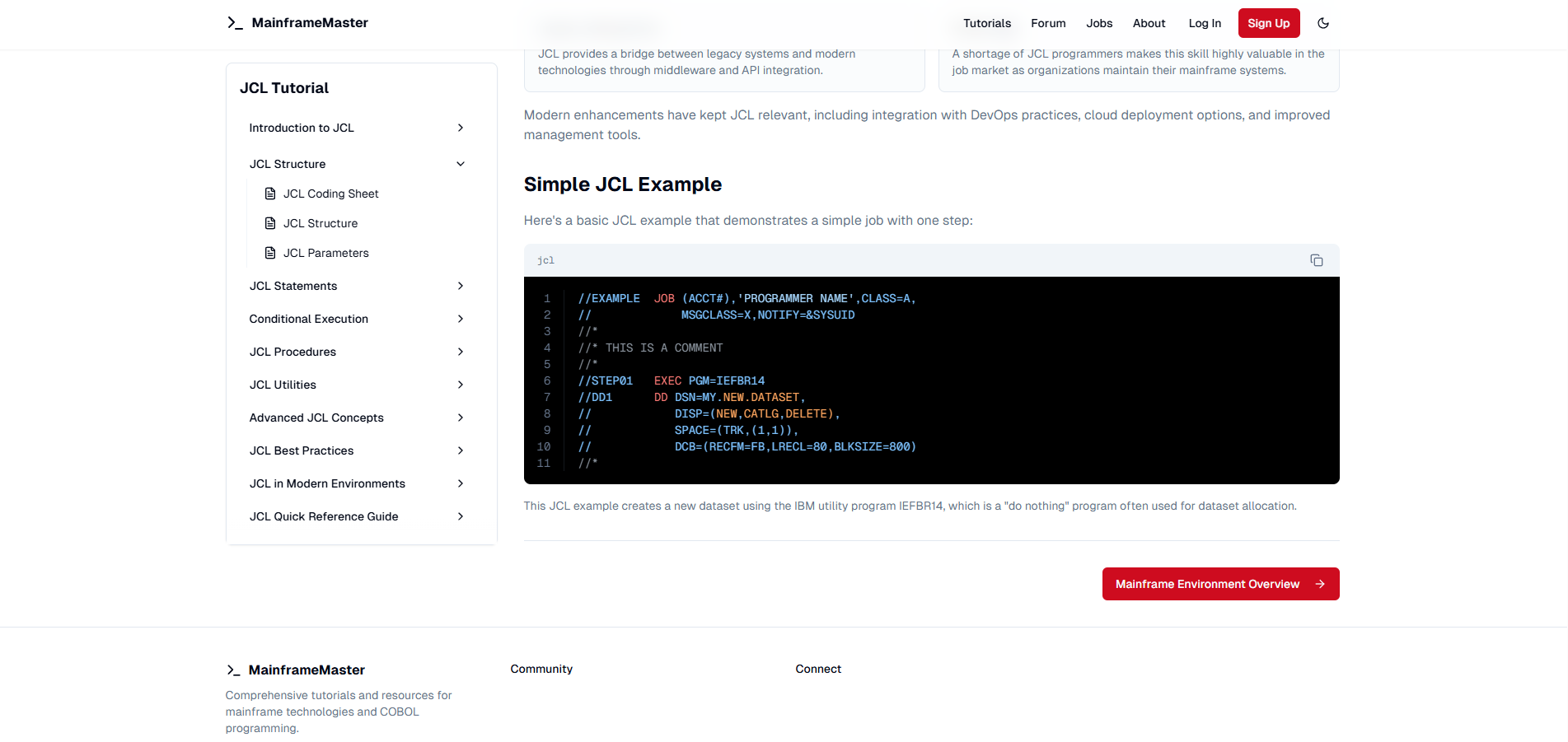
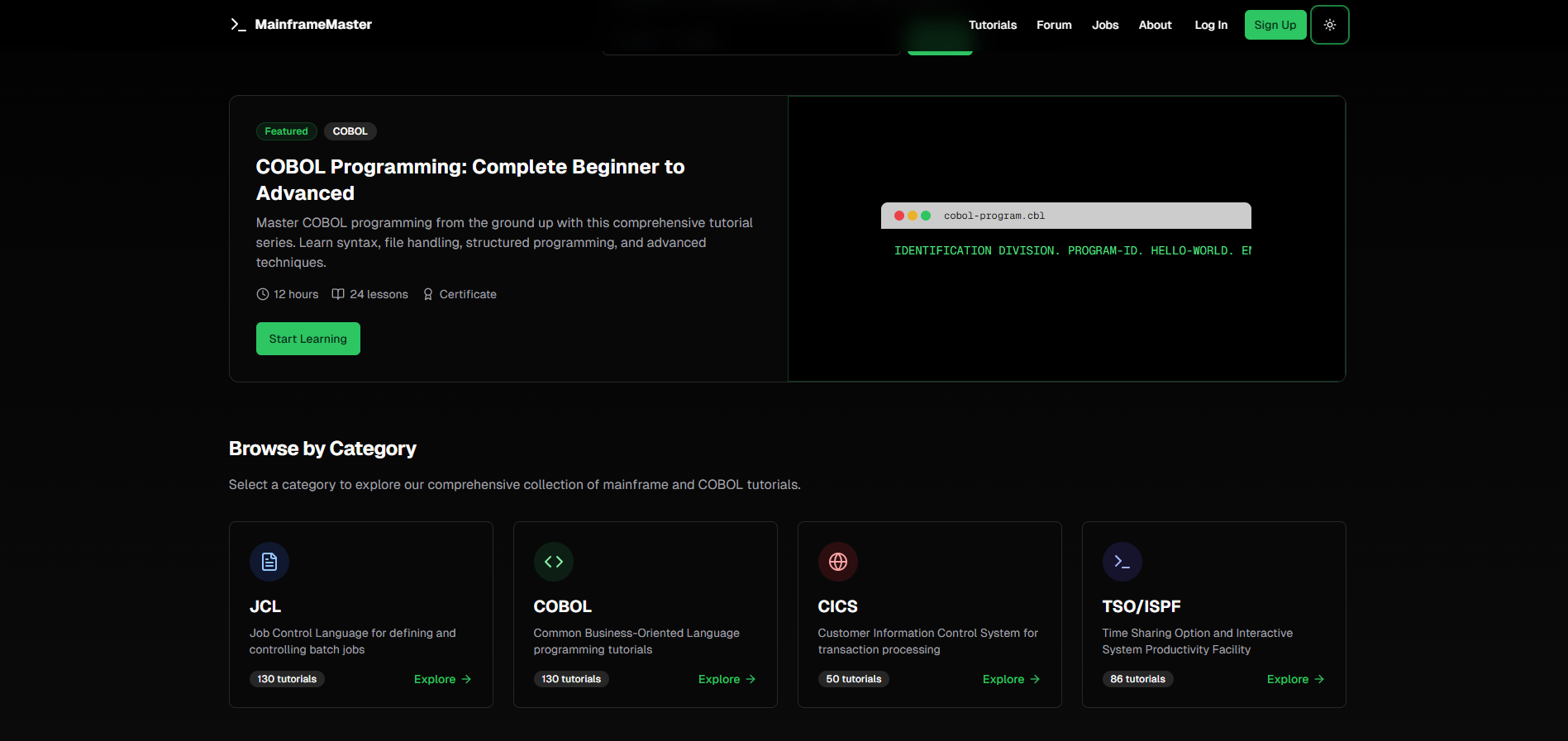
MainframeMaster.com is an educational website dedicated to teaching COBOL and enterprise mainframe technologies through clear, practical, and structured tutorials.
Despite being the backbone of global banking, insurance, government, and large-scale enterprise systems, mainframe technology remains difficult to learn. Documentation is often fragmented, outdated, or written for experienced professionals rather than beginners. As a result, new developers struggle to enter the field, and organisations face a growing skills gap as experienced mainframe engineers retire.
MainframeMaster solves this problem by providing approachable, well-organised learning content focused on real-world mainframe development. The site breaks down complex topics into easy-to-follow explanations, examples, and learning paths that guide users from fundamentals to more advanced concepts.
What Mainframe Master Covers
COBOL programming, from core syntax to practical examples
JCL (Job Control Language) for batch processing
TSO/ISPF usage and navigation
CICS concepts, commands, and transaction processing
Mainframe fundamentals, terminology, and workflows
Common tools and practices used in enterprise environments
The content is designed to reflect how mainframes are actually used in production systems, not just theoretical explanations.
Who It’s For
Mainframe Master is built for:
Beginners with no prior mainframe experience
Students and graduates exploring enterprise computing careers
Developers transitioning into COBOL or mainframe roles
IT professionals refreshing or expanding legacy system knowledge
Organisations looking to upskill junior mainframe staff
Why It Matters
Mainframe systems continue to run some of the world’s most critical workloads, yet learning resources have not kept pace with modern expectations. Mainframe Master aims to preserve institutional knowledge while making it accessible to a new generation of developers.
By lowering the barrier to entry and providing structured, practical guidance, Mainframe Master helps ensure that COBOL and mainframe expertise remains sustainable, relevant, and transferable in today’s technology landscape.
Despite being the backbone of global banking, insurance, government, and large-scale enterprise systems, mainframe technology remains difficult to learn. Documentation is often fragmented, outdated, or written for experienced professionals rather than beginners. As a result, new developers struggle to enter the field, and organisations face a growing skills gap as experienced mainframe engineers retire.
MainframeMaster solves this problem by providing approachable, well-organised learning content focused on real-world mainframe development. The site breaks down complex topics into easy-to-follow explanations, examples, and learning paths that guide users from fundamentals to more advanced concepts.
What Mainframe Master Covers
COBOL programming, from core syntax to practical examples
JCL (Job Control Language) for batch processing
TSO/ISPF usage and navigation
CICS concepts, commands, and transaction processing
Mainframe fundamentals, terminology, and workflows
Common tools and practices used in enterprise environments
The content is designed to reflect how mainframes are actually used in production systems, not just theoretical explanations.
Who It’s For
Mainframe Master is built for:
Beginners with no prior mainframe experience
Students and graduates exploring enterprise computing careers
Developers transitioning into COBOL or mainframe roles
IT professionals refreshing or expanding legacy system knowledge
Organisations looking to upskill junior mainframe staff
Why It Matters
Mainframe systems continue to run some of the world’s most critical workloads, yet learning resources have not kept pace with modern expectations. Mainframe Master aims to preserve institutional knowledge while making it accessible to a new generation of developers.
By lowering the barrier to entry and providing structured, practical guidance, Mainframe Master helps ensure that COBOL and mainframe expertise remains sustainable, relevant, and transferable in today’s technology landscape.